Anne Clifford
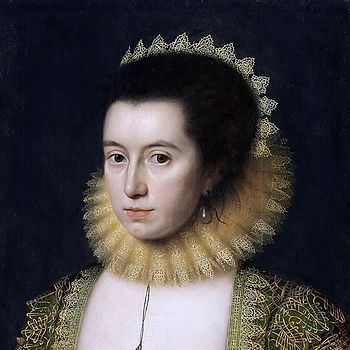

Lady Anne Clifford (1590-1676) was a remarkable English noblewoman known for her lifelong legal battle for her rightful inheritance and her extensive restoration of family castles and churches in the English regions of Yorkshire and Cumbria. Her life spanned the reign of four monarchs and the period of the Commonwealth.
1. A lost inheritance (1590–1605)
Anne was the daughter of George Clifford, the 3rd Earl of Cumberland—a favourite of Queen Elizabeth I but a notorious gambler and privateer. When her father died in 1605, his will bypassed Anne and he left the vast family estates in Westmorland (now in Cumbria) and Yorkshire to his brother, Anne's uncle. Ancient documents suggested the lands should pass to the "heir general" (Anne), but her father willed them to the "heir male." So Anne, aged 15, began a lifelong quest to get them back.
2. Fighting for her rights (1605–1643)
Anne spent her middle years, living in London and the South of England, trapped in unhappy marriages to powerful men who tried to force her to sign away her claims. Her first husband, Richard Sackville, 3rd Earl of Dorset, lived at Knole in Kent, which is perhaps now better known as the home of Vita Sackville-West. Her second husband, Philip Herbert, 4th Earl of Pembroke, resided at Wilton House in Wiltshire. Her monogram, AP, dates back to this time.
Even James I personally tried to intervene in the dispute over her northern estates, urging her to accept a settlement. Anne famously refused to budge, standing her ground against the King, the Archbishop of Canterbury, and her own husbands. In fact she outlived two husbands and several male cousins. But in 1643, the last male heir, of her father, died, and Anne—now in her 50s—finally became the High Sheriff of Westmorland and mistress of her ancestral lands.
3. Restoring and rebuilding (1649–1676)
Once she finally gained control, Anne moved back to the North of England, from Baynard's Castle, the London home of her late, second husband. Despite the chaos of the English Civil War, she ignored Oliver Cromwell’s warnings and began an ambitious building programme. She restored a number of castles and fortified houses in Yorkshire and Westmorland (now in the ceremonial county of Cumbria): Skipton, Appleby, Brougham, Brough, Pendragon, and Barden Tower. She built almshouses for poor women, notably in Appleby, and restored numerous churches, such as Holy Trinity Church Skipton; St Mary's Church Mallerstang; and St Ninian's Church ("Ninekirks") Brougham. We know all this because she kept meticulous records of her life, providing us with a rare, detailed look at the life of a 17th-century noblewoman.
4. The Great Picture
Anne died at the age of 86 in Brougham Castle, in the very room where her father had been born.
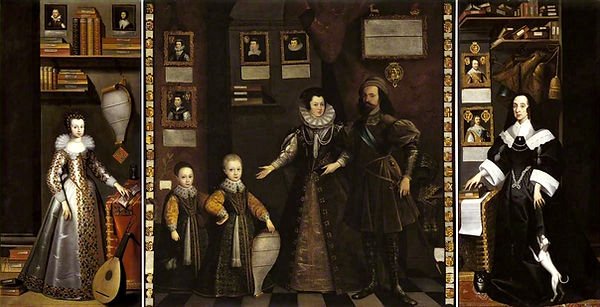
She famously commissioned The Great Picture, a massive triptych painting that tells her life story. It depicts her as a young girl, a mature woman, and a powerful matriarch, surrounded by the books that shaped her intellect—a visual reminder of her right to rule her own life. It is permanently on display at the Abbot Hall Gallery in Kendal, Cumbria.
5. A deep faith
Throughout her life, Anne, a devout Anglican, made every effort to attend church regularly, sometimes spending significant sums of money restoring one, so that her and her retinue had a place to worship while staying in one of her homes.
She relied heavily on her love of the Bible, reading from it every day, particularly from Psalms. She often quotes from scripture in her diaries and seems to have started the habit of making a note of a particular passage or verse in the 1650s. Sometimes the quoted verse seems to reflect on her day or on where she was staying or whom she was with. In her Yearly Memoirs for 18th July 1670, thinking of how blessed she was, she cites Jeremiah 29:6, while staying with her grandchild at Brougham:
Take ye wives, and beget sons and daughters; and take wives for your sons, and give your daughters to husbands, that they may bear sons and daughters; that ye may be increased there, and not diminished. '
In the last few month of her life, as she gives details of her daily life and her ailments, she cites favourite verses from the Psalms and Ecclesiastes. Psalms 23 and 121 were special to her and gave great comfort.